DTF Transfers for T-Shirts: Best Shirts and Fabrics to Use
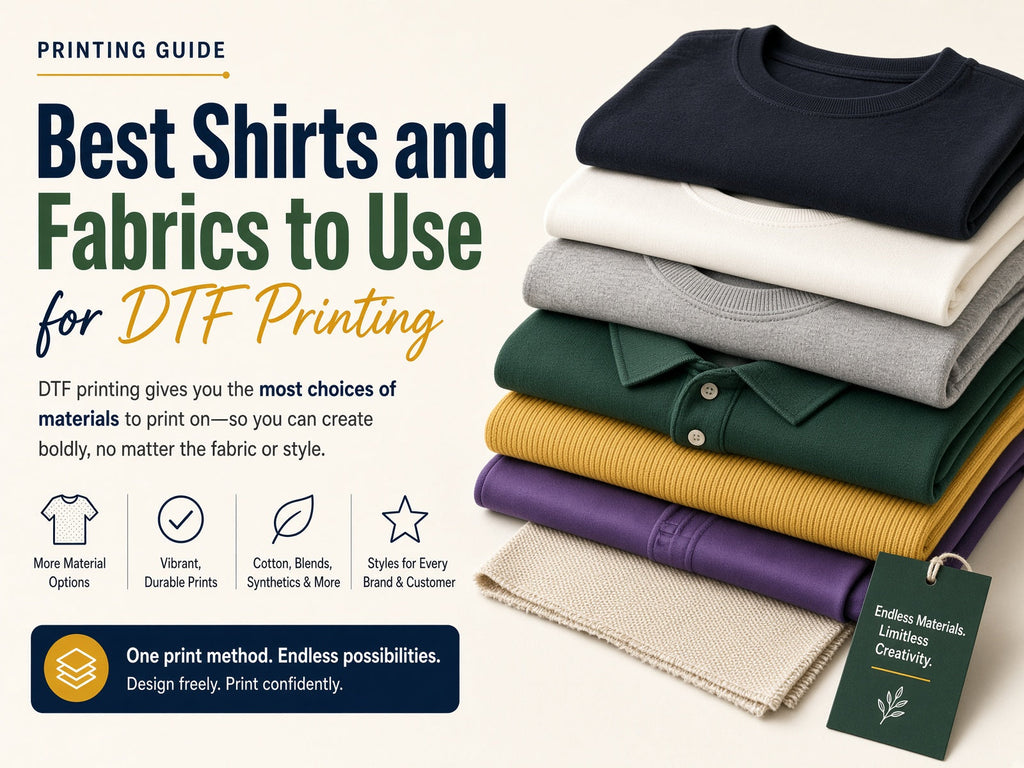
The best shirt for a DTF transfer is the one that matches how it will be worn. DTF (direct to film) bonds to more fabrics than almost any other print method, so you are not stuck with one kind of tee. Still, cotton, blends, polyester, tri-blends, sweatshirts and hoodies each behave a little differently under a heat press. This guide covers each fabric, dark and light colors, pressing, wash care and how to pick the right shirt.
At Cre8tee, every print we make is full color DTF, produced in house in Collegeville, PA. We have been in business since 2011, and our founder has been printing since 2002, so these tips come from a lot of pressing. New to DTF? Our DTF transfers page explains how it works and the two ways to order.
Quick answer: what shirts work best for DTF transfers?
- Easiest and most forgiving: 100% cotton or cotton rich shirts in a midweight fabric.
- Best all purpose choice: cotton and polyester blends, such as 50/50 tees.
- Best for sports and active wear: polyester and performance shirts. Cre8tee transfers press as low as 290°F for 15 seconds, which suits heat sensitive polyester.
- Softest retail feel: tri-blends, with the low end of the heat range and medium to full pressure.
- Best for cold weather and fan gear: sweatshirts and hoodies.
Cotton shirts: the safest starting point
Cotton is the classic choice for DTF transfers for t shirts. It handles press heat well, the adhesive grips the fibers firmly, and it suits event shirts, family reunion tees, school spirit wear and everyday graphic tees.
What to look for in a cotton tee
- A smooth surface. Ring spun or combed cotton gives the transfer a flat, even surface to bond to, which helps fine detail and small text stay crisp.
- Midweight fabric. A shirt with some body holds a large print better than a very thin tee, where a big solid design can feel heavy.
- Preshrunk fabric. Preshrunk shirts keep the print from warping after the first few washes.
Cotton and polyester blends: the all purpose pick
Blends like 50/50 or 60/40 sit between cotton and polyester. They are soft, hold their shape, shrink less than cotton and handle heat better than 100% polyester, which is why they show up so often in team, staff and fundraiser orders.
Heather colors are usually blends. They take DTF well, but darker heathers with a high polyester content can show the same dye issues as polyester (more on that below), so a quick test press is smart before a big run.
Polyester and performance shirts
Yes, you can press DTF transfers on polyester, including moisture wicking performance shirts. Polyester is the go to fabric for athletic shirts and warmups, and DTF prints team names, numbers and sponsor logos on it in full color.
Polyester does need more care at the press:
Watch for dye migration
When dyed polyester gets hot, the fabric's own dye can move up into the print. On a red or maroon shirt, a white design can turn pink. The risk is highest on dark and bright polyester and on sublimated jerseys. Lower press heat reduces that risk, and this is where the Cre8tee transfer formula helps: it presses as low as 290°F for 15 seconds, so polyester never has to see high heat.
Use lower heat and test first
Polyester can scorch, shine or show press marks at high temperatures. With Cre8tee transfers, use the low end of our range, 290°F for 15 seconds, on polyester and performance shirts. Lower heat cuts the risk but cannot rule it out on every dye, so press one test shirt in the exact color you plan to use and check the white areas again after a day.
Skip coated fabrics
Water repellent and coated fabrics often will not let the adhesive bond. If water beads up on it, test first.
Tri-blends: soft and stylish, with a lighter touch
Tri-blend shirts mix cotton, polyester and rayon for a soft, vintage retail feel. DTF looks great on them, but they are thinner and more heat sensitive. Use the low end of the heat range (290°F for 15 seconds with Cre8tee transfers) and medium to full pressure to avoid shiny press marks, and size the design to the shirt. A left chest logo or a moderate front print often feels better on a lightweight tri-blend than a huge solid block.
Hoodies, crewnecks and sweatshirts
Hoodies and sweatshirts are some of the most popular items for DTF, especially for fan gear and holiday gifts. Regular sweatshirt and hoodie fleece works great. We have not yet tested pressing a DTF transfer directly onto 100% spun soft polyester fleece (sometimes called polar fleece), so ask us first if that is the fabric you have. For hoodies and sweatshirts, the main challenge is the shape, not the fabric.
Pressing over seams, pockets and zippers
- Use a pressing pillow or pad inside the hoodie so the transfer sits flat above the seams and the front pocket.
- Keep the design clear of the drawstring holes and the zipper on full zip hoodies.
Dark shirts vs light shirts
DTF prints a layer of white ink behind the colors, so designs look bright and opaque on black, navy and other dark shirts, not just on white. You can pick shirt colors freely.
A few color tips:
- Dark polyester and bright reds carry the most dye migration risk, so test those first.
- Tie dye works well with DTF. Busy backgrounds look best with bold designs that have a clear outline.
Heat press settings for Cre8tee DTF transfers
Our transfer formula is flexible: higher heat needs less time, and lower heat needs more. Any setting in this range works:
| Heat | Time | When to use it |
|---|---|---|
| 290°F | 15 seconds | Low temp option for polyester, performance and other heat sensitive shirts |
| 315°F | 5 to 8 seconds | Our everyday setting, the one we use most |
| 325°F | 5 seconds | Top of the range, shortest press |
Use medium to full pressure. Cre8tee transfers are hot peel, so peel the film while it is still hot.
Step by step
- Prepress the shirt for a few seconds to remove moisture and wrinkles.
- Position the transfer and press at a setting from the table with medium to full pressure.
- Peel hot, low and slow, keeping the film close to the shirt.
- Post press to set the print and choose the finish (see below).
- Test first on any new fabric, color or brand.
Post pressing: glossy or matte finish
For a front only print, give it a post press after you peel:
- Glossy finish: post press with a Teflon sheet over the print.
- Soft, textured, matte look: post press with a plain shirt over the print instead of Teflon.
For a front and back print, only the back needs a post press. Press the front, then the back. Pressing the back transfer re-seals the front, so the front is already set.
Wash care that keeps prints looking new
A well pressed DTF print is built to last. Cre8tee DTF prints last 75+ washes when pressed and cared for correctly. To get the most out of yours:
- Wash inside out in cold or warm water.
- Avoid high dryer heat. Tumble dry low or hang dry.
- Skip bleach and fabric softener.
- Never iron directly on the print.
- Many suppliers suggest waiting about 24 hours before the first wash.
How to choose the right shirt for your DTF order
Ask four questions before you pick a shirt:
- Who is wearing it? Athletes want polyester, fans want cotton or a blend, and cold weather calls for a hoodie.
- How should it feel? Tri-blends feel the softest. Midweight cotton feels sturdy. Blends land in the middle.
- What color is the shirt? Any color works, but test dark or bright polyester for dye migration.
- How big is the design? Large solid prints feel best on midweight fabric. Small logos work on almost anything.
Not sure? Tell us how the shirts will be used and we will help you choose. We offer design help, finished DTF apparel and bulk team and group orders, with free shipping on bulk orders. See our bulk orders page, browse finished designs in Shop All Sports, or request a bulk quote and we will confirm the details before anything is printed.
Frequently asked questions
What is the best shirt material for DTF transfers?
For most orders, 100% cotton or a cotton rich blend in a midweight fabric is the easiest and most reliable. Polyester and tri-blends also work well with lower heat and a test press.
Do DTF transfers work on 100% polyester?
Yes. DTF bonds to polyester. With Cre8tee transfers, use our low temp setting of 290°F for 15 seconds, and test the exact shirt color first, since dark and bright polyester can bleed dye into the print.
Can you put DTF on dri fit or performance shirts?
Yes. Moisture wicking shirts take DTF well at lower heat, such as 290°F for 15 seconds with Cre8tee transfers. Sublimated jerseys and very dark performance shirts carry the most dye migration risk, so test one before a full run.
Does DTF work on hoodies?
Yes. Hoodies and sweatshirts are some of the best items for DTF. Use a pressing pillow so the transfer sits flat over seams and the front pocket. We have not yet tested DTF directly on 100% spun soft polyester fleece, so ask us first if that is the fabric you have.
What heat press settings do Cre8tee DTF transfers use?
Anywhere from 290°F for 15 seconds up to 325°F for 5 seconds, with medium to full pressure. Higher heat needs less time. 315°F for 5 to 8 seconds is our everyday setting, and 290°F for 15 seconds is best for polyester. Peel hot.
How long do DTF prints last?
Cre8tee DTF prints last 75+ washes. Wash inside out and avoid high dryer heat for the best results.
-
Posted in
Custom Apparel, DTF on Polyester, DTF Transfers, Heat Press Tips, Hoodies, Shirt Guide, Team Apparel