What Are DTF Transfers? A Plain-Language Guide
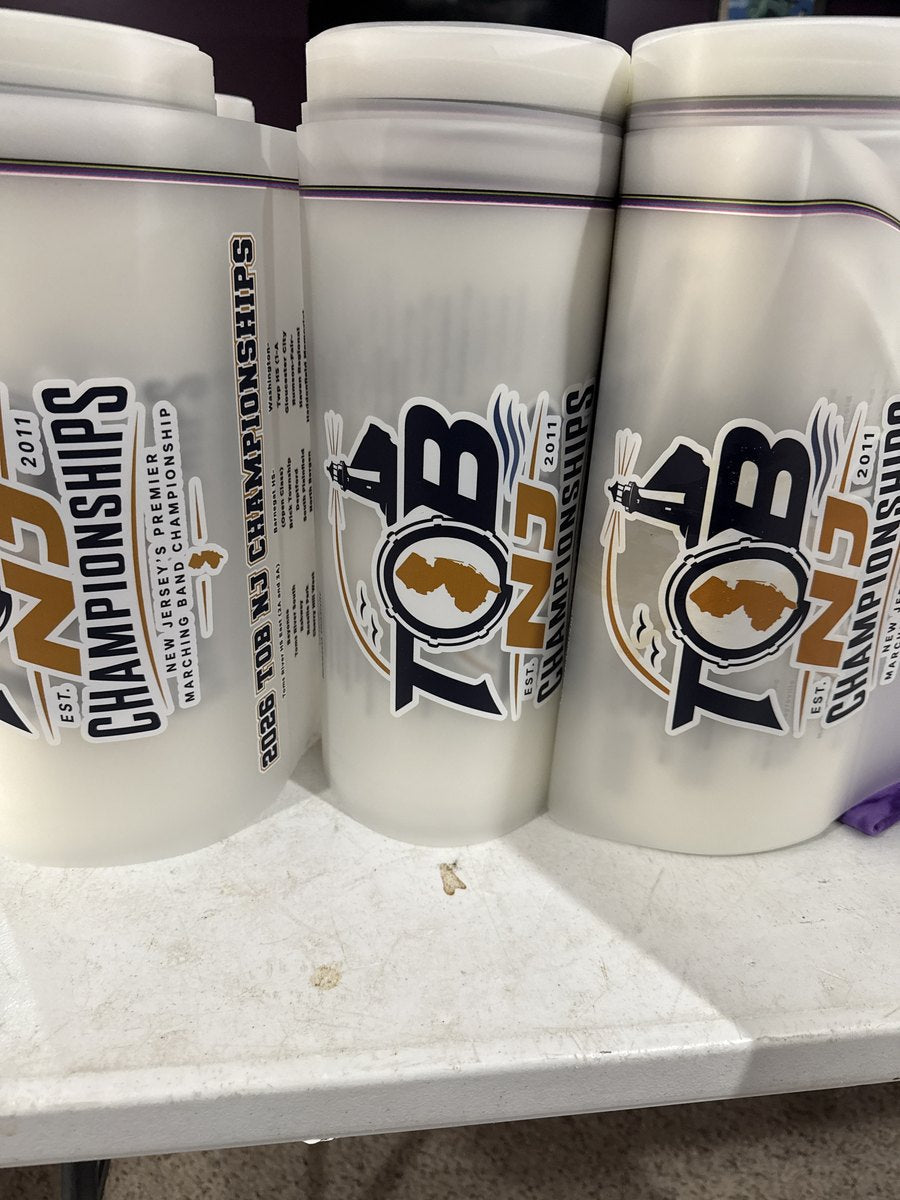
DTF transfers are full-color designs printed onto a thin film, coated with an adhesive powder and cured, so they can be heat pressed onto a shirt, hoodie, tote or hat. DTF stands for direct to film. If you have seen the term on a print shop's website or in a crafting group and wondered what it actually means, this guide explains how DTF works, what it is good at, where it falls short and how to order transfers that are ready to press.
At Cre8tee we print with full-color DTF and make our own DTF transfers. We have been in business since 2011, and our founder has been printing since 2002. We are based in Collegeville, PA.
How DTF transfers are made
A DTF transfer goes through four stages before it ever touches a garment.
- Printing on film. The design is printed in reverse onto a clear PET film using textile inks. A layer of white ink is printed behind the color, which is what lets the design show up bright on dark shirts.
- Powdering. While the ink is still wet, a hot-melt adhesive powder is applied across the print. The powder sticks only to the inked areas.
- Curing. The film passes through heat, which melts the powder into a smooth adhesive layer on the back of the design.
- Pressing. The finished transfer is placed on the garment and pressed with a heat press. Heat and pressure bond the adhesive into the fabric. Cre8tee transfers are hot peel, so peel the film while it is still hot and the design stays on the shirt.
Because the design is printed digitally, there are no screens, plates or color separations to set up. One design or fifty different designs cost the same amount of setup work, which is why DTF is popular for small runs and mixed orders.
What DTF transfers are good for
DTF has become a go-to decoration method because it handles jobs that used to be awkward or expensive.
- Full color and fine detail. Gradients, photos, small text and multi-color logos print in one pass. There is no limit on the number of colors.
- Many fabrics. DTF works on cotton, polyester and blends, in light or dark colors. That covers most T-shirts, hoodies, performance shirts and tote bags. Sweatshirts and hoodies work great. We have not yet tested DTF directly on 100% spun soft polyester fleece, so ask us first if that is the fabric you have.
- Small quantities and mixed designs. Since there is no setup per color, a run of a few pieces, or many different names and designs, is practical.
- Ready-to-press convenience. A shop or a maker can press transfers on demand without owning a DTF printer.
- Hats and odd spots. Transfers can go on caps, sleeves, pocket areas and other places that are hard to reach with other methods, as long as you have the right press or attachment.
Where DTF has limits
No method is perfect for everything. Here is where to set expectations.
- Feel. A DTF print sits on top of the fabric as a thin, flexible layer. Large solid areas feel more noticeable than small logos or designs with open space.
- Very large prints. Big full-front designs mean more film and more ink on the shirt, so they cost more and feel heavier than a chest logo.
- Heat-sensitive materials. Some fabrics and coated items do not handle heat well. Always test a scrap or a spare item first.
- Pressing matters. A DTF transfer is only as good as the press. The wrong temperature, time or pressure can cause peeling or a poor bond.
How DTF compares to other methods
People usually compare DTF to heat transfer vinyl (HTV), sublimation and print methods that need setup for each color. In short:
| Method | Best for | Main tradeoff |
|---|---|---|
| DTF | Full-color art on cotton, poly and blends, small or mixed runs | Thin layer on top of the fabric |
| HTV | Simple one-color names and numbers | Cutting and weeding each color by hand |
| Sublimation | Light-colored polyester | Does not work on cotton or dark shirts |
| Methods with per-color setup | Very large runs of one simple design | Setup for every color makes small runs costly |
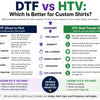
We focus on DTF because it handles full-color art on almost any common fabric without per-color setup. We cover the vinyl comparison in more detail in our DTF vs HTV guide in Apparel Guides.
How long do DTF prints last?
A well-pressed DTF print is durable. Our prints are rated for 75+ washes when the garment is cared for properly. To get the most life out of a DTF print:
- Wait at least 24 hours before the first wash.
- Wash inside out in cold or warm water.
- Skip bleach and fabric softener.
- Tumble dry low or hang dry. Avoid high dryer heat.
- Do not iron directly on the print.
Ordering DTF transfers from Cre8tee
We make our own DTF transfers, so you can order ready-to-press transfers of your own art. Here is what to know right now:
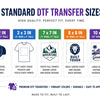
- Max width of 10.5 inches. That covers left chest logos, sleeve prints and most full-front designs on adult shirts.
- Turnaround is currently 3 to 4 days. We are not taking rush orders right now.
- Our press settings: 290°F for 15 seconds, 315°F for 5 to 8 seconds, or 325°F for 5 seconds, with medium to full pressure. Higher heat needs less time. Cre8tee transfers are hot peel. Do a test press on a spare garment first.
See sizes and ordering details on our DTF transfers page.
Getting your art ready
Good transfers start with good files. Send a PNG with a transparent background at 300 DPI at the size you want printed. Avoid hairline strokes and tiny text that may not hold up, and remove stray pixels around the edges. If your file is low resolution, ask us before ordering so we can tell you how it will print.
Would you rather get finished shirts?
If you do not own a heat press, we can print the finished apparel for you. Teams, schools, businesses and groups can start with our bulk orders page and send their quantities, garment choice and deadline for a quote.
Frequently asked questions
What does DTF stand for?
DTF stands for direct to film. The design is printed directly onto film first, then transferred to the garment with heat and pressure.
Do DTF transfers work on dark shirts?
Yes. DTF prints a white layer behind the colors, so designs stay bright on black, navy and other dark garments.
Can I press DTF transfers with a household iron?
It can work for a one-off, but a heat press gives even heat and pressure and a much more reliable bond. An iron is a backup, not the best tool.
Do DTF transfers crack or peel?
When pressed at the right settings and washed with care, DTF prints hold up well. Peeling is almost always a pressing issue: too little heat, time or pressure.
Is DTF the same as sublimation?
No. Sublimation dyes the fibers of light polyester. DTF sits on the surface as a flexible layer and works on cotton, polyester and blends in any color.