DTF vs HTV: Which Is Better for Custom Shirts?
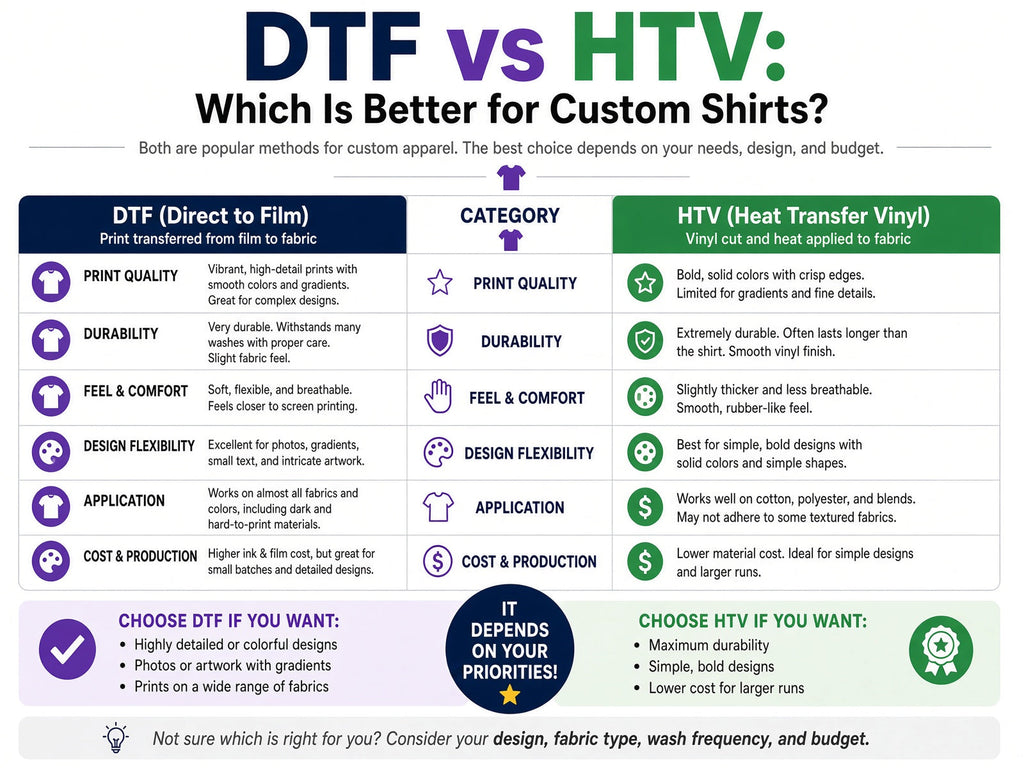
DTF and HTV both put a design on a shirt with a heat press, so they get compared a lot. They are very different under the hood, though, and picking the wrong one can cost you hours of weeding or a stack of prints that look flat. This guide walks through how each method works, how they compare on color, feel, durability and cost, and when each one is the smarter choice.
Quick answer: choose DTF for multi-color logos, detailed art, photos and mixed designs. HTV can still be a fine choice for a single name or number in one color if you already own a vinyl cutter.
How each method works
DTF (direct to film)
The full design is printed in color, with a white layer behind it, onto a clear film. An adhesive powder is applied and cured. You press the transfer onto the garment, peel the film and the whole design is on in one step, no matter how many colors it has.
HTV (heat transfer vinyl)
HTV is a sheet of colored vinyl with a heat-activated adhesive. A cutter cuts the shape, you weed away the vinyl you do not need by hand, then press it. A three-color design means cutting, weeding and pressing three separate layers, lined up by eye.
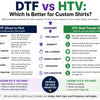
Side by side
| DTF | HTV | |
|---|---|---|
| Colors | Unlimited, including gradients and photos | One color per layer |
| Fine detail | Small text and thin lines hold well | Limited by what the blade can cut and you can weed |
| Prep time | Print and press | Cut, weed and layer each color |
| Feel | Thin, flexible layer | Smooth vinyl layer; stacked colors feel thicker |
| Fabrics | Cotton, polyester, blends, light or dark | Many fabrics, depending on the vinyl type |
| Best run size | One piece to large mixed runs | One-offs and short runs of simple art |
Color and detail
This is where DTF pulls ahead. A full-color mascot, a logo with a gradient or a photo is one transfer with DTF. With HTV, the same art would need to be simplified into a few flat colors, and each color is another layer to cut, weed and line up. Tiny text, thin outlines and distressed textures are hard to weed in vinyl, but they print cleanly on film.
Feel and stretch
Both methods leave a layer on top of the fabric. A single layer of quality HTV feels smooth and can be quite soft. Once you stack two or three colors of vinyl, the print gets thicker and stiffer. A DTF print is one thin layer regardless of how many colors are in it, and it flexes with the fabric, which matters on performance shirts and hoodies.
Durability
Both can last a long time when pressed correctly and washed with care. Most failures with either method come from pressing at the wrong temperature, time or pressure, or from washing too soon. Our DTF prints are rated for 75+ washes when the garment is washed inside out and kept away from high dryer heat.
Prep time and labor
Labor is the hidden cost of HTV. Weeding a detailed design by hand can take longer than pressing it, and every extra color adds cutting, weeding and alignment. With DTF, the work happens at the printer. When you receive ready-to-press transfers, your only job is the press itself. For a shop pressing many pieces, that difference adds up quickly.
Cost by run size
There is no single winner on cost, so think about the job:
- One simple name in one color: HTV is often the cheapest if you already own a cutter and vinyl.
- A multi-color logo on a few shirts: DTF usually wins, since you skip the layered weeding.
- Many different designs or names on one order: DTF is efficient because each design costs the same to print, with no extra setup per color.
- Large, detailed art: DTF, because vinyl gets thick and slow to weed at that size.
When HTV still makes sense
HTV is not obsolete. It is a good fit for one-color names and numbers on jerseys, specialty finishes like glitter or reflective vinyl, and quick one-offs at home when you already have the tools. Some decorators use both: DTF for the full-color front logo and vinyl for a name on the back.
When to choose DTF
Pick DTF when your design has more than one or two colors, any gradient or photo element, small text or fine lines, or when you are pressing many different designs. It is also the easier choice for dark garments, since the white underbase is printed into the transfer. For more background on how DTF is made and pressed, browse our Apparel Guides.
Get DTF transfers from Cre8tee
We print with full-color DTF and make our own transfers. The max print width is 10.5 inches, and turnaround is currently 3 to 4 days. We are not taking rush orders right now. Our transfers use a flexible formula: 290°F for 15 seconds, 315°F for 5 to 8 seconds, or 325°F for 5 seconds, with medium to full pressure. Higher heat needs less time. Cre8tee transfers are hot peel. See the details on our DTF transfers page.
Do not have a heat press? We can print finished shirts, hoodies and more for teams, schools and businesses through bulk orders.
Frequently asked questions
Is DTF better than HTV?
For multi-color and detailed designs, yes. DTF prints every color in one transfer with no weeding. HTV is still handy for simple one-color names and numbers.
Which lasts longer, DTF or HTV?
Both are durable when pressed and washed correctly. Our DTF prints are rated for 75+ washes with proper care.
Can you layer HTV on top of DTF?
Many decorators add a vinyl name or number next to a DTF print. Avoid pressing one directly on top of the other unless your materials say they are compatible, and test first.
Does DTF feel heavier than HTV?
A single vinyl layer and a DTF print feel similar. Multi-color vinyl stacks get thicker, while a DTF print stays one thin layer.
Do I need a vinyl cutter for DTF?
No. DTF transfers come printed and ready to press. You only need a heat press.
What heat press settings do Cre8tee DTF transfers use?
Anywhere from 290°F for 15 seconds up to 325°F for 5 seconds, with medium to full pressure. Higher heat needs less time. 315°F for 5 to 8 seconds is our everyday setting, and 290°F for 15 seconds is best for polyester. Peel hot. Run a test on a spare garment first.